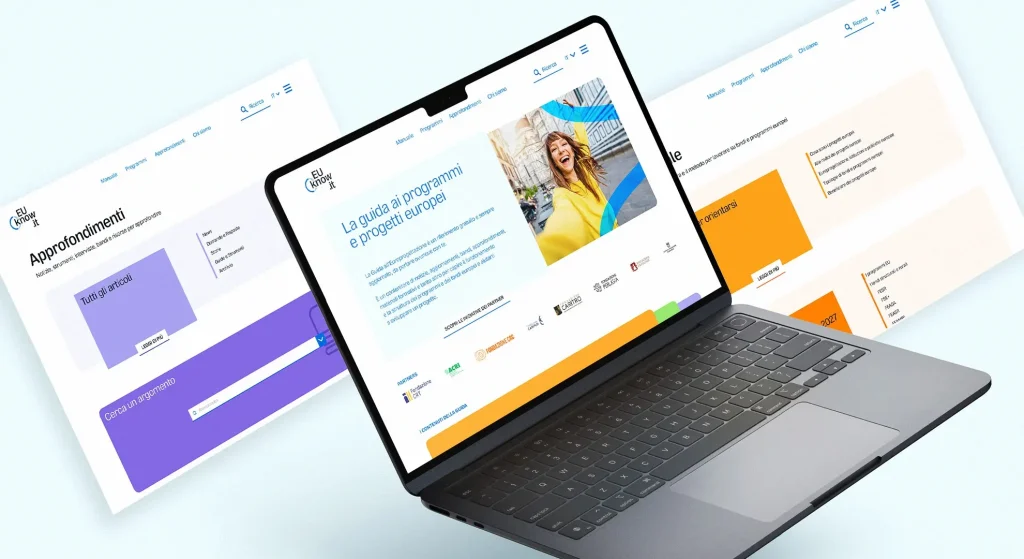

The Guide offers various chapters and articles on how to work on European projects. We are putting things in order and have delved into some important aspects.
European projects: time to tidy up
Summer is here, and it’s time to fit all the things in your suitcase.
The time has also come to bring some order to the contents of the Guide, which will soon be presented with a new, simpler and more effective look and organization.
We do not want to lose any of the content that has been appreciated by our users over the years; rather, we take the opportunity to update and extend what has been offered so far.
Working on European projects: more order, more content
We have done on some chapters of our Handbook, particularly those devoted to “how” to work on European projects.
Some “old” chapters have gone to the attic: “Coming to terms with…” and “Devising and managing a project.”
They have been replaced by two new chapters, placed at the top of Section 3. Taking up and extending content already present, the new chapters propose respectively:
- All the information you need to work well before, during, and after the release of a notice. Specifically: how and where to look for information, support, and partners for your European projects; how and based on what criteria to choose your call for proposals; what are the main elements of a call for proposals and a project proposal. You will find this in the newchapter 3.1, Preparing for Your Project;
- Key tips for dealing with the project when the call for proposals comes and you need to get to work. Specifically: what are the conditions and aspects to consider before getting down to business; how to approach writing a project; how to prepare a budget and handle the administrative aspects. You will find this in the newchapter 3.2, Submitting a Project.
The reason for this change
With this reorganization and expansion we first wanted to give greater visibility to some important aspects in project practice; and a clearer and more complete logical order to our “manuals” section.
We have moved to the tail end of these two new chapters those that deal more specifically with the logical framework,project idea analysis, Partnerships, monitoring and evaluation, and reporting. With this we wanted to follow what was suggested by many of the “EU projects and funding stories” we told, which emphasize the importance of inscribing EU projects and funding in a broad process, part of everyday work.
In addition, many people have pointed out to us the importance of better understanding how to get information, how to find partners and support, what calls for proposals look like, and how to actually go about preparing a project. The work is not yet finished and we will try to elaborate further, but having started to cover these aspects-and having placed them at the head of the dedicated section-is already a good step in this direction.
This reorganization is also intended to take up in a more organic way important aspects addressed “in no particular order” in various in-depth articles (which will continue to exist): sources for finding out about calls, sources for in-depth content, the most important tools and guides (apart from ours!), national contact points, organizations-umbrella organizations, major events and streaming platforms, and criteria for choosing a call.
A new calls portal for European projects
The news does not end there: as previously announced, we have created a full-fledged calls portal, offering a selection of calls of all kinds: European programs, regionally and nationally managed programs, and territorial cooperation programs.
You can sort calls by type, by program, by due date, and by date of publication in our Guide. You can also search by keywords.
We recommend that you also continue to refer to the official pages, using in particular the Funding and Tenders and OpenCoesione portals, because our review is not exhaustive. But it has the added value of unifying all possible calls of interest on one page, with a focus on third sector organizations and the public sector.
In addition, as was previously the case, the new page provides access to CSVnet’s Infobandi.net portal, the platform created by volunteer service centers in collaboration with Acri, which also includes funding opportunities offered by national and international public and private entities.
The new calls portal replaces the previously published periodic reviews, allowing you to browse all reported calls through a single tool. However, we will continue to report the most interesting news through our news.
A “construction site” that continues
We hope we have done a job our readers will enjoy.
We are also working similarly on other sections, including in particular “questions and answers” and “in-depth guides.” This will be a gradual process and we will alert you when there are more extensive changes.
In the meantime, read the new chapters and let us know if you find them interesting: you can find us on Facebook, LinkedIn and at our usual e-mail address.